



Fabricated Delusions and Manufactured Hallucinations
Posted: May 25, 2026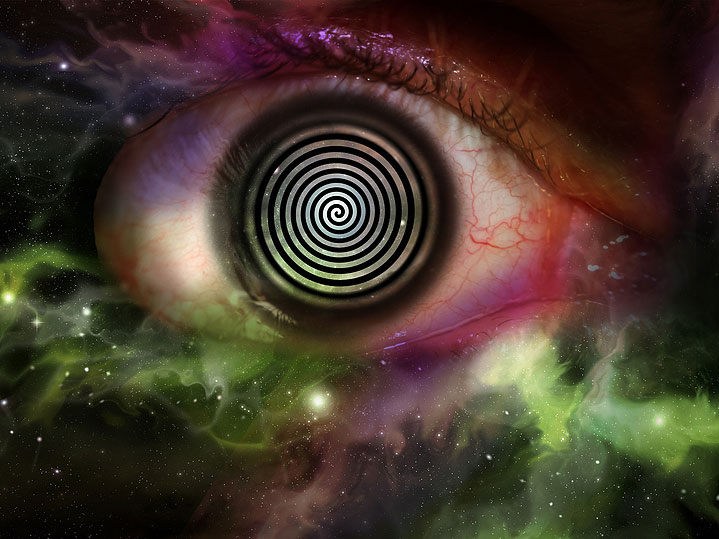
Psychology defines psychosis partly through two hallmark symptoms: delusions and hallucinations. Delusions are fixed beliefs held despite contradictory evidence. Hallucinations are perceptions experienced as real, even though no external stimulus exists. These clinical concepts are described in the Diagnostic and Statistical Manual of Mental Disorders, Fifth Edition, Text Revision, which outlines how impaired reality testing can distort perception and belief (American Psychiatric Association, 2022).
What happens when those same mechanisms appear not in individuals, but within information systems?
In The Epistemic Psychosis™, delusions are fabricated through the architecture of modern media ecosystems. Narratives are repeated, reinforced, and socially rewarded within tightly bounded information communities. Evidence that contradicts those narratives is filtered out, reframed, or dismissed as manipulation. Over time, belief systems become insulated from correction. The result mirrors the psychological structure of delusion: a belief network that becomes increasingly resistant to disconfirming evidence.
Hallucinations, by contrast, emerge when fabricated signals are experienced as authentic reality. Synthetic media—AI-generated images, altered video, simulated voices, and fabricated documents—can create events that appear to have occurred even when they have not. When these signals circulate widely enough, individuals encounter them as perceptual evidence. In this sense, the modern information environment can produce manufactured hallucinations: convincing sensory artifacts that mimic genuine observation.
The danger is not merely misinformation. Societies have always contained rumors and propaganda. The bigger risk arises when belief formation and perception themselves become systematically distorted. When delusions are reinforced socially, and hallucinations are technologically manufactured, the conditions for The Epistemic Psychosis™ emerge—an environment in which the boundary between reality and fabrication becomes progressively harder to maintain.
The antidote is disciplined verification. We must increasingly rely on primary evidence, cross-check multiple credible sources, and maintain relationships with subject-matter experts capable of evaluating complex claims. Without such habits, the cognitive defenses that normally protect reality testing can erode.
Psychosis in the clinical sense is a disorder of individuals. The Epistemic Psychosis™ describes something different: a cultural condition in which the mechanisms that normally anchor belief and perception to reality begin to fail.
Categorized in: The Epistemic Psychosis