



Fairness is a Mirage. Equity is a System
Posted: January 28, 2026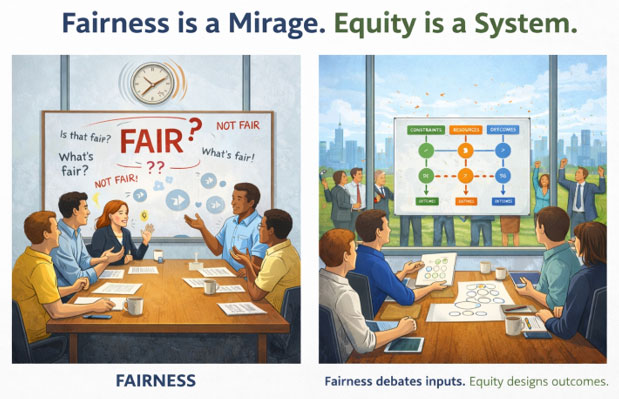
Equity is ipsative while fairness is normative.
Fairness has become an obsession, just like blaming leaders for toxic organizations has. The intent is to project blame or mysteriously make everything equal. Like perfection, fairness is a mirage; we think we see it, but when we get close, it disappears.
Rather than seeking the ever-illusory image of fairness, we should focus on the very real, sustainable, self-reinforcing goal of equity. Equity meets us where we are. It takes into account the individual and the organization. Rather than asking “what’s in it for me?” (i.e., fairness), equity asks what’s in it for us?
Individually and organizationally, equity enables a culture and climate of alignment and growth. Equity is the difference between a four-cylinder engine and a six-cylinder turbo. Fairness might give everyone the same starting point, but it never accounts for circumstances. On the other hand, equity creates value through informed risk-taking. Risk reflects goals, the “operational environment”, and awareness of potential barriers to success.
The argument is not a moral critique of fairness but a functional one. Fairness evaluates sameness; equity evaluates outcomes. The cost of prioritizing fairness is delay, while the value of equity is accountability for results. Rather than normative, one-size-fits-all solutions, equity creates an ipsative, customized, and incentivized climate and culture that offers the most significant opportunities for individual and organizational success.
If outcomes matter, the distinction is not ideological—it is unavoidable.
Categorized in: General